
Simple Ways to Reduce Daily Stress
- Peace.co.uk
- 1 day ago
- 5 min read
Finding calm in a busy world
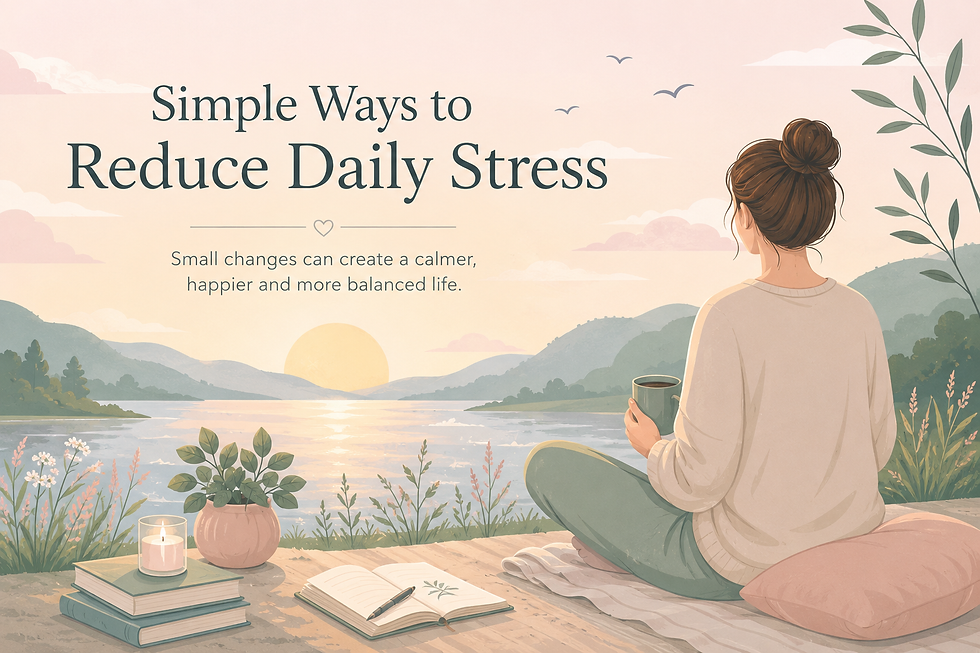
Stress has become such a common part of modern life that many people barely notice it anymore.
A busy schedule.
A growing to-do list.
Constant notifications.
Financial worries.
Family responsibilities.
Work pressures.
Life can sometimes feel like a never-ending stream of demands competing for our attention.
While a certain amount of stress is normal, too much can affect our wellbeing, sleep, mood and overall quality of life.
The good news is that reducing stress does not always require major lifestyle changes.
Often, the most effective solutions are surprisingly simple.
Small daily habits can help create a greater sense of calm, balance and peace of mind.
Understanding Daily Stress
Stress is the body's natural response to challenges and demands.
In small amounts, it can help us stay focused and motivated.
However, when stress becomes constant, it can leave us feeling exhausted, overwhelmed and mentally drained.
Many people spend so much time reacting to life's pressures that they forget to create space for recovery.
Reducing daily stress is not about eliminating every challenge.
It is about learning how to manage those challenges in healthier ways.
1. Start Your Day More Slowly
Many people begin the day in a rush.
Checking emails.
Scrolling through social media.
Thinking about everything that needs to be done.
This can create stress before the day has properly started.
Instead, try giving yourself a few quiet minutes each morning.
Enjoy a cup of tea.
Open a window.
Take a few deep breaths.
A calmer start often leads to a calmer day.
2. Spend Time Outdoors

Nature has a remarkable ability to reduce stress.
A short walk through a park.
A stroll beside a river.
A few moments spent sitting in a garden.
These simple experiences can help slow racing thoughts and improve your mood.
You do not need hours in the countryside to benefit.
Even a brief connection with nature can make a difference.
3. Focus on One Thing at a Time
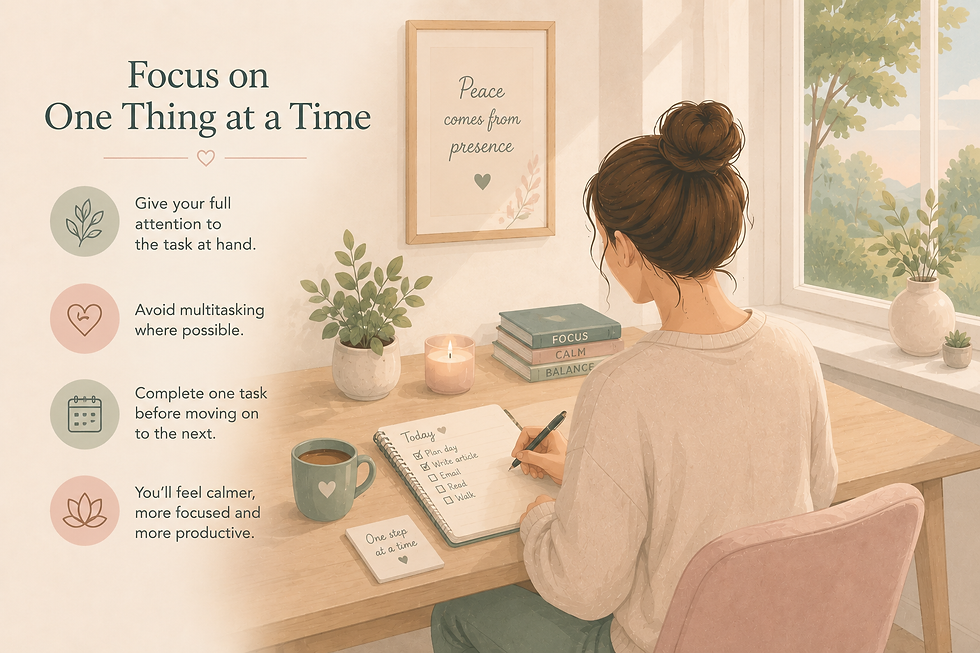
Multitasking is often praised as a valuable skill.
In reality, constantly switching between tasks can increase feelings of stress and mental fatigue.
When possible, focus your attention on one task at a time.
Give it your full attention.
Then move on to the next.
You may find yourself feeling calmer and more productive.
4. Take Regular Breaks

Many people push through the day without stopping.
Eventually, concentration begins to fade and stress levels increase.
Short breaks help refresh the mind.
Stand up.
Stretch.
Walk around.
Make a drink.
Look out of a window.
A few minutes away from a task can often improve focus and reduce tension.
5. Spend Less Time on Screens

Technology connects us in wonderful ways.
However, constant exposure to news, notifications and social media can also increase stress.
Consider creating small periods of screen-free time each day.
Read a book.
Go for a walk.
Spend time with family.
Sit quietly for a few minutes.
Giving your mind a break from digital stimulation can feel surprisingly refreshing.
6. Get Enough Sleep
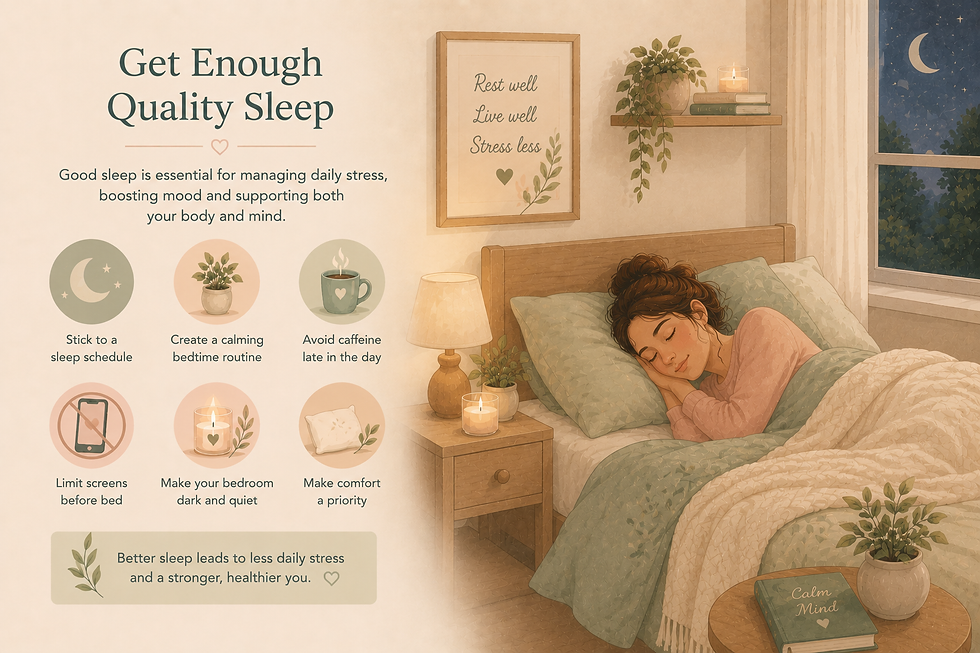
Lack of sleep can make everyday challenges feel much harder than they really are.
When we are tired, we often become more sensitive to stress.
Creating a relaxing bedtime routine can improve sleep quality.
Try dimming lights in the evening.
Avoid screens before bed.
Create a calm and comfortable sleep environment.
Good sleep is one of the most powerful tools for reducing daily stress.
7. Practise Gratitude

Stress often causes us to focus on what is wrong.
Gratitude encourages us to notice what is going well.
This does not mean ignoring difficulties.
It simply means creating balance.
At the end of the day, try thinking of three things you are grateful for.
They do not need to be extraordinary.
A good conversation.
A sunny day.
A peaceful walk.
Small moments often matter more than we realise.
8. Learn to Say No
Many people experience stress because they take on too much.
They agree to commitments they do not have time for.
They try to please everyone.
They rarely put their own needs first.
Learning to say no is not selfish.
It is a healthy way to protect your time, energy and wellbeing.
9. Create a Peaceful Home Environment
The spaces around us can influence how we feel.
A cluttered, noisy environment can sometimes add to stress.
A calm, organised space can help us relax.
You do not need a perfect home.
Small changes can make a big difference.
Clear a surface.
Open the curtains.
Add a plant.
Create a comfortable corner where you can unwind.
10. Move Your Body
Exercise is one of the most effective ways to reduce stress.
The good news is that it does not need to be intense.
A gentle walk.
A bike ride.
Stretching.
Gardening.
Dancing in the kitchen.
Any form of movement can help release tension and improve mood.
The goal is not perfection.
The goal is simply to move.
11. Spend Time With People Who Lift You Up
Human connection is important for emotional wellbeing.
Spending time with supportive friends and family can help us feel understood, valued and less alone.
A simple conversation can sometimes provide the perspective we need.
Strong relationships often act as a buffer against stress.
12. Accept What You Cannot Control
One of the biggest sources of stress is worrying about things beyond our control.
The weather.
Other people's opinions.
Unexpected events.
Future uncertainties.
While we cannot control everything that happens, we can control how we respond.
Accepting uncertainty can create a surprising sense of freedom.
13. Take Things One Day at a Time
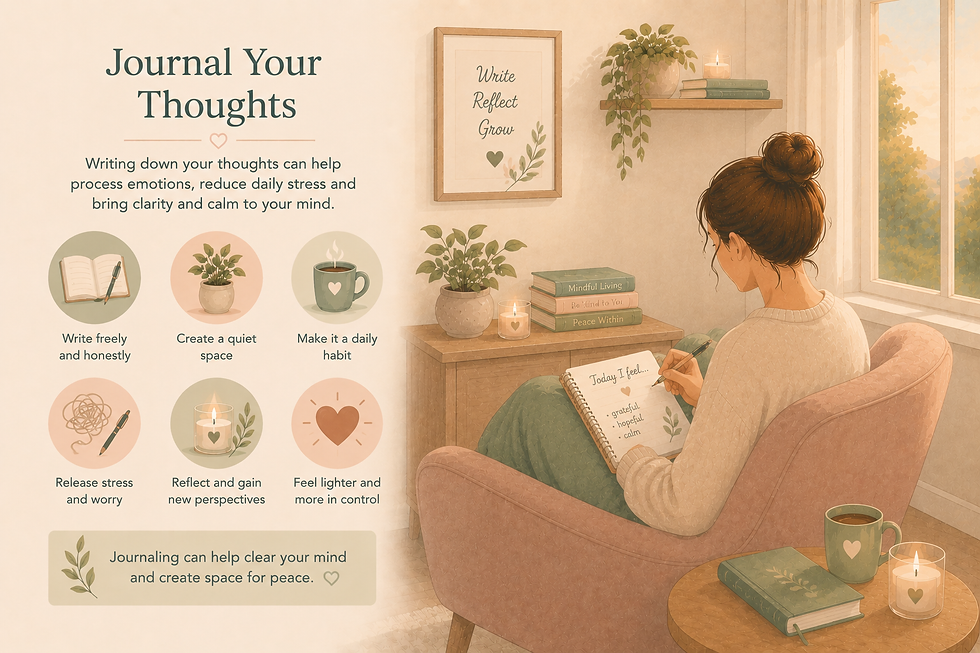
When life feels overwhelming, it is easy to think about everything at once.
The problem with this approach is that it often makes challenges feel bigger than they really are.
Focus on today.
Focus on the next step.
Focus on what you can do right now.
Small steps taken consistently often lead to meaningful progress.
Why Small Changes Matter
Many people assume stress reduction requires dramatic changes.
A new job.
A different lifestyle.
A complete life overhaul.
Sometimes change is necessary.
More often, however, lasting improvements come from small daily habits.
A little more rest.
A little less rushing.
A little more time outdoors.
A little more kindness towards yourself.
These small changes can gradually transform how you feel.
Final Thoughts
Stress is a normal part of life.
But living in a constant state of stress does not have to be.
Simple habits can help create more calm, more balance and greater peace of mind.
Take a walk.
Get some rest.
Slow down occasionally.
Spend time with people you care about.
Appreciate small moments.
Be gentle with yourself.
Because reducing daily stress is not about creating a perfect life.
It is about creating a life that feels a little lighter, a little calmer and a little more enjoyable each day.
And sometimes, that is more than enough.


Comments