
How to Declutter Your Home Without Feeling Overwhelmed
- Peace.co.uk
- 2 days ago
- 5 min read
Creating a calmer home starts one small step at a time

There is something wonderfully relaxing about walking into a tidy room.
The surfaces are clear.
The space feels lighter.
You can find what you're looking for.
And perhaps most importantly, your mind feels a little calmer too.
Yet for many of us, clutter has a habit of quietly accumulating.
A pile of unopened post.
A drawer full of mystery cables.
A wardrobe containing clothes we haven't worn since several Prime Ministers ago.
Before long, the task of decluttering can feel so overwhelming that we put it off entirely.
The good news is that creating a more organised and peaceful home doesn't require a complete weekend overhaul.
In fact, the most effective approach is often the simplest.
Small steps.
Steady progress.
No stress.
Here is how to declutter your home without feeling overwhelmed.
Why It Can Feel Difficult to Declutter Your Home
Clutter is not just a physical issue.
It can become a mental one too.
Every pile of paperwork.
Every overflowing cupboard.
Every drawer that refuses to close properly.
They all quietly demand attention.
Even when we're not consciously thinking about them.
A cluttered environment can make it harder to relax because the brain continues to process unfinished tasks and visual distractions.
Creating a calmer home often begins by creating a little more space.
Start Smaller Than You Think
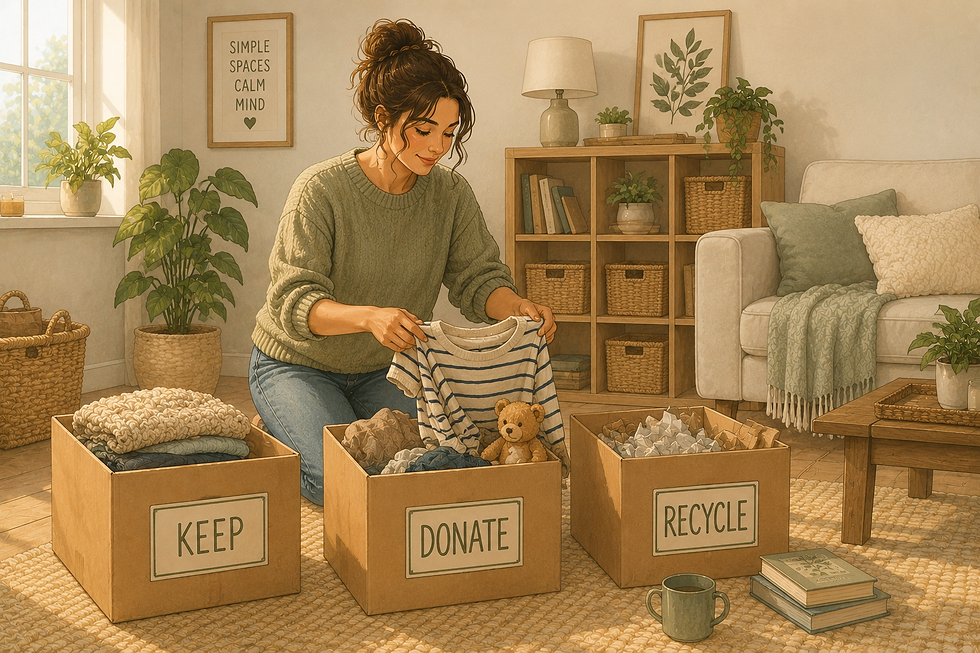
One of the biggest mistakes people make is trying to declutter the entire house in one day.
That usually ends with:
A bigger mess than when you started
Frustration
Exhaustion
A takeaway menu because the kitchen table is now buried under belongings
Instead, start small.
Very small.
One shelf.
One drawer.
One cupboard.
One corner of a room.
Success creates momentum.
Use the 10-Minute Rule
Decluttering doesn't have to take hours.
Set a timer for ten minutes.
Choose one small area.
Focus only on that space.
When the timer ends, stop.
You will be surprised how much progress can be made in such a short period.
Ten minutes feels manageable.
And manageable tasks get completed.
Focus on One Room at a Time
Trying to tackle multiple rooms at once can quickly become overwhelming.
Choose one room.
Finish that room.
Then move on.
The sense of achievement that comes from completing a single space is often far more motivating than half-finishing five different ones.
Ask Yourself One Simple Question
When deciding whether to keep something, ask:
"Does this item improve my life today?"
If the answer is yes, keep it.
If the answer is no, it may be time to let it go.
This simple question removes much of the emotional complexity from decision-making.
Create Three Simple Categories
As you declutter, sort items into:
Keep
Donate
Recycle or dispose
Avoid creating endless categories.
The simpler the system, the easier it is to make progress.
Let Go of Guilt
Many people keep things because they feel guilty.
Gifts they never use.
Clothes that no longer fit.
Hobbies they no longer enjoy.
Items purchased with good intentions.
Remember:
Keeping something out of guilt does not make it more useful.
It simply takes up space.
Your home should support your current life, not preserve every version of your past.
Clear Surfaces First
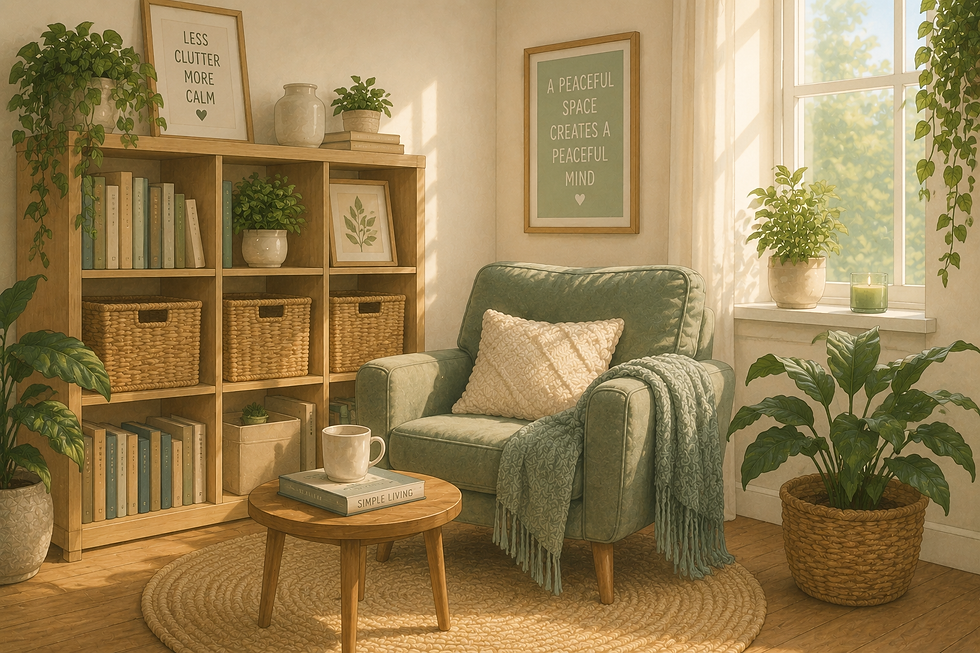
If you're unsure where to begin, start with visible surfaces.
Kitchen worktops.
Coffee tables.
Sideboards.
Desks.
Clear surfaces create an immediate sense of calm and progress.
Sometimes a room can feel dramatically different after just twenty minutes of surface decluttering.
Be Realistic About Storage
Storage solutions can be helpful.
But sometimes the real issue isn't a lack of storage.
It's simply too much stuff.
Before buying more baskets, boxes or organisers, consider whether reducing the number of items might be the better solution.
Don't Aim for Perfection
A peaceful home is not a showroom.
Nobody lives inside a furniture catalogue.
There will still be shoes by the door.
A blanket on the sofa.
Perhaps a biscuit tin that mysteriously empties itself.
The goal isn't perfection.
The goal is comfort, functionality and peace.
The One-In, One-Out Rule
Once you've decluttered, maintenance becomes easier.
A simple habit is:
When something new comes into the home, something old leaves.
Buy a new jumper?
Donate one you no longer wear.
New kitchen gadget?
Remove one gathering dust at the back of a cupboard.
Small habits prevent clutter from quietly returning.
Declutter Sentimental Items Last
Sentimental belongings are often the hardest.
Photographs.
Letters.
Family keepsakes.
Memory boxes.
Leave these until later.
Build confidence by tackling easier areas first.
When the time comes, you'll find decision-making much easier.
Celebrate Progress
Many people focus on what remains to be done.
Instead, focus on what you've already achieved.
One cleared drawer.
One organised shelf.
One tidy room.
Progress is still progress.
And every small improvement contributes to a calmer home.
The Hidden Benefits of Decluttering
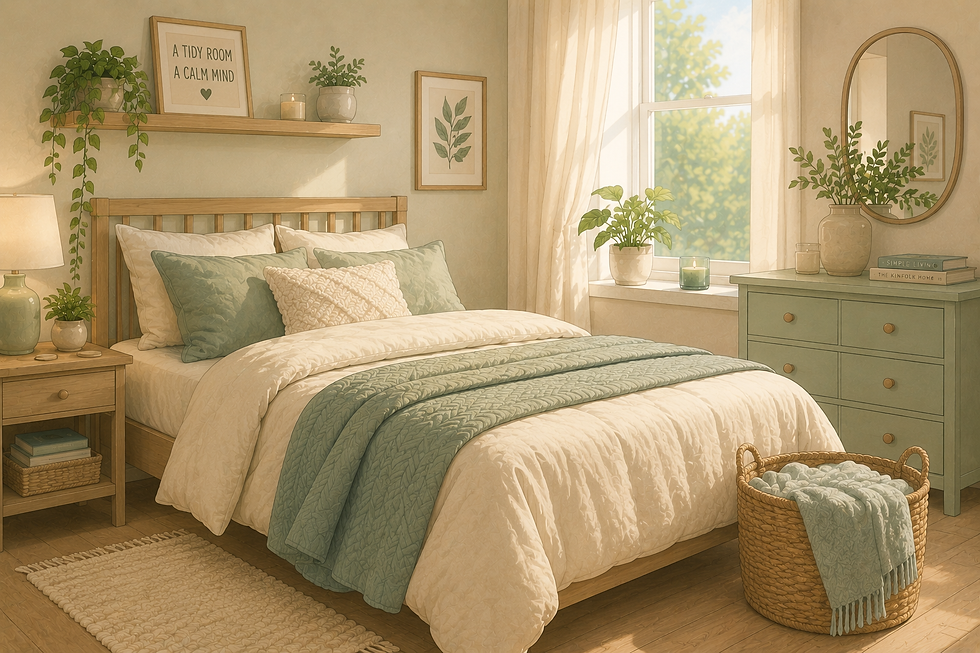
People often begin decluttering because they want a tidier home.
But they frequently discover additional benefits too.
Less stress.
Better focus.
More space.
Less time spent searching for things.
Easier cleaning.
Greater enjoyment of the home itself.
Decluttering is rarely just about possessions.
It's often about creating room for the life you want to live.
You Don't Need to Finish Everything Today
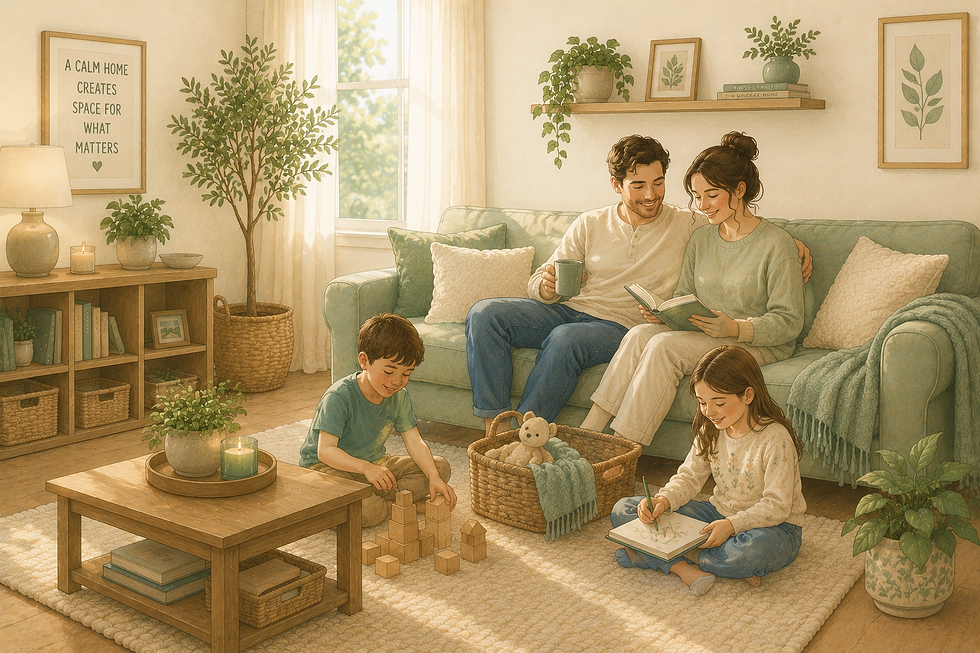
This may be the most important point of all.
You do not need to complete your entire home this weekend.
Or this month.
Or even this year.
A peaceful home is not built through one dramatic effort.
It is created through small choices repeated consistently over time.
One drawer.
One shelf.
One cupboard.
One room.
Eventually those small changes add up to something remarkable.
Final Thoughts
Decluttering is not about owning as little as possible.
It is about making space for what matters most.
The people you love.
The activities you enjoy.
The moments of calm you need.
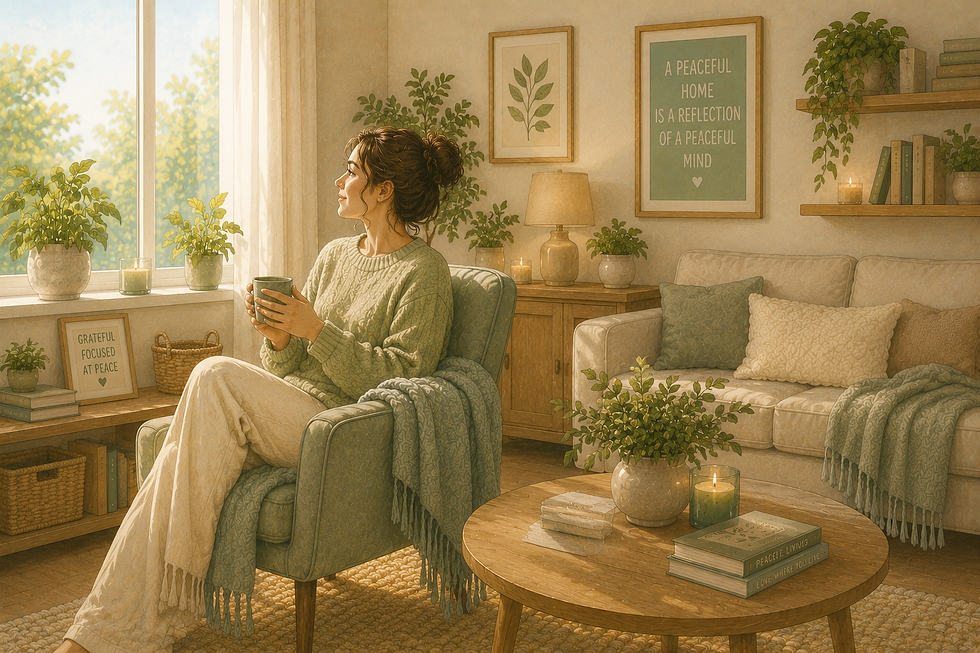
A more peaceful home does not happen overnight.
It happens gradually.
One decision at a time.
So start small.
Choose a drawer.
Set a timer.
Make a cup of tea afterwards.
And enjoy the simple satisfaction that comes from creating a little more space, a little more order and a little more peace in your home.


Comments